
























How Fuel Saving Tips Help Reduce Fuel Costs
Fuel economy means how far your car travels on one gallon of gas. Most US drivers call this MPG, or miles per gallon. Better MPG means you use less gas for the same trip. The good news is that you do not need to be a mechanic. Most ways to improve gas mileage come from how you drive and care for your car. Aggressive driving can lower gas mileage by about 15% to 30% at highway speeds and 10% to 40% in stop-and-go traffic, according to FuelEconomy.gov. That means fast starts and hard braking can cost you real money.
What You Need to Know
- Smooth driving saves fuel.
- Proper tire pressure helps MPG.
- Extra weight makes your engine work harder.
- Speeding burns more gas.
- A poorly maintained car can waste fuel.
10 Fuel Saving Tips to Improve Gas Mileage
1. Drive Smoothly Instead of Aggressively
Fast starts, sharp braking, and sudden lane changes waste fuel. Your engine uses more gas when you force it to speed up quickly. Try to press the gas pedal gently. Leave more space between you and the car ahead so you can brake less often. This is one of the easiest gas-saving habits because it costs nothing. It also makes driving safer.
2. Slow Down on the Highway
Driving faster does not always save much time. It often burns more gas instead.FuelEconomy.gov says gas mileage usually drops quickly above 50 mph. It also estimates that every 5 mph over 50 mph can feel like paying about $0.32 more per gallon.You do not have to crawl in the slow lane. Just avoid pushing 75 or 80 mph when 65 mph will do.
3. Keep Your Tires Properly Inflated
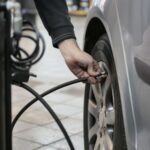
Low tire pressure creates more rolling resistance. That means your engine must work harder to move the car.FuelEconomy.gov says proper tire pressure can improve gas mileage by 0.6% on average and up to 3% in some cases. It also says that under-inflated tires can lower mileage by about 0.2% for every 1 psi drop across all tires.Check the sticker inside your driver-side door. Do not use the maximum pressure printed on the tire sidewall.
4. Remove Extra Weight From Your Car
A trunk full of tools, sports gear, boxes, or junk can reduce MPG. Your car needs more fuel to move extra weight.FuelEconomy.gov says an extra 100 pounds can reduce MPG by about 1%. Smaller cars usually feel this more than larger vehicles.Clean your trunk once a month. Keep emergency items, but remove things you do not need.
5. Avoid Long Idling
Idling means your engine runs while the car is parked. You get zero miles per gallon while idling.FuelEconomy.gov says idling can use about one-quarter to one-half gallon of fuel per hour. It also says restarting most modern cars uses only about 10 seconds of fuel.Turn the engine off if you will sit for more than a minute. Do this at pickup lines, parking lots, and long waits.
6. Use Cruise Control on Long Highway Drives
Cruise control helps your car hold a steady speed. A steady speed often uses less fuel than constant speeding up and slowing down.Use it on open highways when traffic is light. Avoid using it in heavy traffic, in rain or snow, or on steep hills.This simple habit can help reduce fuel costs on road trips and daily highway commutes.
7. Plan Trips Before You Leave
Short trips with a cold engine use more fuel. Your car runs better after it warms up.Try to combine errands into one route. For example, stop at the grocery store, pharmacy, and gas station in one loop.This saves time and gas. It also reduces wear on your car.
8. Use the Right Motor Oil
Motor oil helps engine parts move smoothly. The wrong oil can create extra friction and hurt fuel economy.FuelEconomy.gov says using the manufacturer’s recommended oil grade can improve gas mileage by 1% to 2%. Check your owner’s manual or oil cap for the correct grade.This is a smart Car Maintenance habit. It helps your engine and your wallet.
9. Remove Roof Racks and Cargo Boxes When Not Needed
Roof racks and cargo boxes create wind drag. Wind drag means your car has to push harder through the air.FuelEconomy.gov says a large roof cargo box can reduce fuel economy by 6% to 17% on the Highway and 10% to 25% at interstate speeds.Remove roof boxes after trips. A rear-mounted cargo carrier usually hurts MPG less than a roof box.
10. Fix Check Engine Lights Early
A check engine light can mean many things. Some problems are small, but others can waste fuel.A bad oxygen sensor, dirty spark plugs, or a fuel system issue can hurt MPG. You do not need to guess. Most auto parts stores can scan codes for free.If the light flashes, stop driving and call a mechanic. A flashing light can mean serious engine damage.
Best Gas Saving Habits and Mistakes to Avoid
Do Not Warm Up Your Car for Too Long
Many drivers still warm up their car for 10 minutes in winter. Most modern cars do not need that.Start the car, wait a short moment, then drive gently. The engine warms faster when you drive.Avoid hard acceleration until the engine reaches normal temperature.
Do Not Buy Premium Gas Unless Your Car Requires It
Premium gas costs more. It does not help most regular cars get better MPG.If your owner’s manual says “regular unleaded,” use regular. If it says “premium required,” use premium.Some cars say “premium recommended.” In that case, regular may be fine, but performance may drop a little.
Do Not Ignore Tire Alignment
Bad alignment causes your tires to drag on the road. This can hurt fuel economy and wear tires faster.Signs include a steering wheel that pulls left or right. You may also see uneven tire wear.A wheel alignment often costs around $75 to $150 in the US. Prices depend on your car and the local shop.
Do Not Race From Red Light to Red Light
Hard acceleration wastes fuel and rarely saves time. You often catch the same red light anyway.Look ahead while driving. Ease off the gas early when traffic slows.This is one of the most practical fuel saving tips for city drivers.
Cost Estimates: When to See a Mechanic to Reduce Fuel Costs
Some gas-saving steps are free. Others cost money but can pay off over time.
Here are common US price ranges:
- Tire pressure check: usually free
- Engine air filter: about $20 to $50
- Oil change: about $35 to $100
- Wheel alignment: about $75 to $150
- Spark plug replacement: about $150 to $400
- Diagnostic scan: free to $150, depending on the shop
See a mechanic if your MPG drops suddenly. Also, get help if you smell fuel, feel shaking, hear misfires, or see a check engine light.A small repair can stop a bigger bill later. This is where Car Problems and gas costs often connect.
Final Thoughts
Learning how to save money on gas does not require special tools or car knowledge. Start with smoother driving, proper tire pressure, and fewer wasted trips. These small changes can make your car feel easier to live with every day.For simpler driver advice, explore our guides on Car Tips, Car Maintenance, and common Car Problems. Small habits add up, and every saved gallon helps.
Frequently Asked Questions
What is the easiest way to save money on gas?
The easiest way to save money on gas is to drive smoothly. Avoid fast starts, hard braking, and speeding. These habits cost nothing and can start helping right away.
Does driving slower really improve gas mileage?
Yes, driving slower can improve gas mileage, especially on highways. Fuel economy often drops quickly above 50 mph. Staying near the speed limit is one of the best gas-saving habits.
Does tire pressure affect gas mileage?
Yes, tire pressure affects gas mileage. Low tire pressure creates more rolling resistance, which makes the engine work harder. Check your tire pressure at least once a month.
Is cruise control good for saving gas?
Cruise control can help save gas on flat highways. It keeps your speed steady and reduces unnecessary acceleration. Do not use it in heavy traffic or bad weather.
Does using AC waste gas?
Yes, air conditioning can use extra fuel. The effect depends on the car, outside temperature, and driving speed. At highway speeds, using the AC may be better than driving with the windows open.
Is premium gas better for fuel economy?
Premium gas does not improve fuel economy in most cars that require regular gas. Use the fuel grade listed in your owner’s manual. Paying more for a premium usually does not save money.
How can I reduce fuel costs without spending money?
You can reduce fuel costs by slowing down, removing excess weight, avoiding idling, and planning errands more efficiently. These steps are free. They work best when you use them every week.
