































An Auto Loan for Private Seller Cars helps you buy a used car from an individual seller, not a dealership. You borrow money from a bank, credit union, or online lender. The lender pays the seller or lienholder. You repay the loan monthly after the title lists the lender as the lienholder.Buying from a private seller can save money. But the loan process has a few extra steps. You must check the car, verify ownership, and handle title transfer correctly.This guide explains requirements, rates, documents, and smart tips. It is written for everyday drivers who want a simple path before they buy.
Quick Answer Box
- A private party auto loan lets you finance a used car sold by a person, not a dealer.
- You usually need the VIN, title details, bill of sale, proof of income, insurance, and seller information.
- Rates can be higher than dealer used-car loans, so compare banks, credit unions, and online lenders.
What Is a Private Party Auto Loan?
A private party auto loan is a car loan for a private sale. The seller is a person, not a car dealership.You apply through a bank, credit union, or online lender. If approved, the lender sends payment to the seller or lienholder.A lienholder is the lender listed on the title. This means the lender has a legal claim to the car until you pay the loan.This type of loan is useful when you find a used Toyota Camry, Honda Civic, Ford F-150, or Chevy Tahoe from an owner. It gives you financing without needing cash up front.An Auto Loan for Private Seller Cars can be a smart option. But it needs more care than buying from a dealership.Dealers often handle paperwork for you. In a private sale, you and the seller must handle more steps yourselves.
Auto Loan for Private Party Purchase: How It Works
An auto loan for a private party purchase works in a simple order. You choose the car first, then apply for the loan.Most lenders want details about the car before approval. They need to know the car’s age, mileage, value, and title status.
Step 1: Find the Car
Start with a car that fits your budget. Look at listings on Facebook Marketplace, Craigslist, AutoTrader, Cars.com, or local groups.Check the asking price against tools like Kelley Blue Book or Edmunds. This helps you avoid overpaying.
Step 2: Check the Car Details
Ask the seller for the VIN. The VIN is the vehicle identification number.It works like the car’s fingerprint. You can use it to check accidents, title brands, recalls, and ownership history.Also, ask for the mileage, title status, and payoff amount if the car has a loan.
Step 3: Get Preapproved
Preapproval means a lender gives you a loan estimate before final approval. It helps you know your budget.A preapproval can show your possible APR, term, and monthly payment. APR means annual percentage rate.APR is the full yearly cost of borrowing. It includes interest and some fees.
Step 4: Finish the Loan Approval
After preapproval, the lender may ask for more documents. These can include income proof, insurance, title details, and seller information.The lender may also check the car’s value. They do this to make sure the car is worth the loan amount.
Step 5: Pay the Seller and Transfer the Title
Once approved, the lender may pay the seller directly. If the seller still owes money, the lender may pay the old lender first.Then you complete the title transfer with your DMV. The lender will be added as a lienholder.This step is very important. Do not take the car home without clear title instructions.
Car Loan for Private Seller Requirements
A car loan for a private seller purchase needs the buyer’s documents, the seller’s documents, and the car details. Each lender has its own rules.Still, most lenders ask for the same basic items. Prepare them early to avoid delays.
Buyer Requirements
You will usually need:
- Valid driver’s license
- Proof of income
- Proof of address
- Social Security number
- Current auto insurance
- Down payment, if required
- Credit check approval
Lenders use this information to judge risk. Strong credit can help you get a better rate.A lower debt-to-income ratio can also help. This means your monthly debts are not too high compared to your income.
Seller Requirements
The seller may need to provide:
- Full legal name
- Contact details
- Copy of the vehicle title
- Loan payoff details, if there is a lien
- Odometer reading
- Signed bill of sale
- Payoff lender information, if needed
A bill of sale is a simple sale document. It lists the buyer, seller, car, price, and sale date.Some states require a bill of sale. Others do not, but it is still smart to use one.
Vehicle Requirements
The car must also qualify. Many lenders set limits on age, mileage, value, and title condition.A lender may reject cars with salvage, rebuilt, flood, or lemon titles. These cars carry more risk.Many lenders also avoid very old cars. A 15-year-old car with 180,000 miles may be harder to finance.Before applying, ask the lender about limits. This saves time before you pay for inspections.
Private Seller Car Financing Rates and Costs
Private seller car financing rates can vary a lot. Your credit, income, loan term, car age, and lender all matter.In 2026, many strong-credit borrowers may see rates in the high single digits. Borrowers with weak credit can see much higher APRs.Private party rates can be higher than dealer used-car rates. Lenders may see private sales as harder to verify.
What Affects Your Rate?
Your rate depends on:
- Credit score
- Loan amount
- Loan term
- Car age
- Car mileage
- Down payment
- Income stability
- Existing debt
- Lender type
Credit unions often offer competitive rates. Banks and online lenders may offer faster approvals.A shorter loan term can reduce total interest. But it can raise your monthly payment.A longer term lowers monthly payments. But you may pay more interest over time.
Simple Payment Example
Here is a simple example.You buy a used Honda Accord from a private seller for $18,000. You put $2,000 down and finance $16,000.At 9% APR for 60 months, the payment may be about $332 per month. At 14% APR, it may be about $372 per month.That rate difference can cost you around $40more each month. Over five years, that adds up fast.Use this example as a rough guide. Your real payment depends on lender fees, taxes, title, and state costs.
Extra Costs to Plan For
Do not only plan for the sale price. Private sales can include extra costs.
Plan for:
- Sales tax
- Title transfer fee
- Registration fee
- Pre-purchase inspection
- Insurance
- Vehicle history report
- Possible repairs after purchase
A pre-purchase inspection often costs around $100 to $250. It can save you from buying a car with hidden problems.For more buying checks, read our Used Car Buying guides before you sign.
Financing a Car From a Private Seller: Tips to Avoid Problems
Financing a car from a private seller can work well. But you must protect yourself before money changes hands.A private seller may not know every issue. Some sellers may also hide problems.
Get the Car Inspected First
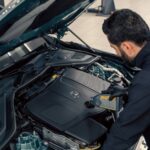
Always get a pre-purchase inspection. Ask a trusted mechanic to check the car.The mechanic should check the engine, brakes, tires, suspension, leaks, and warning lights. They should also scan for trouble codes.Do not skip this step because the car “drives fine.” Many expensive issues are easy to miss.You can also read our Car Maintenance section for basic used-car checks.
Check the Title Before You Apply
Ask to see the title early. Make sure the name on the title matches the seller’s ID.Avoid title jumping. This happens when a seller sells a car without putting it in their name first.Also, look for title brands. Salvage, rebuilt, flood, or lemon titles can hurt value and financing approval.
Compare at Least Three Lenders
Do not accept the first offer. Compare at least three lenders before choosing.
Check:
- APR
- Loan term
- Monthly payment
- Fees
- Funding time
- Vehicle limits
- Prepayment penalty
A prepayment penalty is a fee for paying the loan early. Try to avoid it when possible.A small rate difference can matter. Even 1% can save money on a larger loan.
Keep the Loan Term Reasonable
Try to avoid stretching the loan too long. A 72-month or 84-month loan can lower payments.But long loans can keep you in debt longer. You may also owe more than the car is worth.This is called being upside down. It can create problems if the car gets totaled or sold early.
Never Pay Before the Paperwork Is Clear
Do not hand over cash without a clear title plan. This is even more important if the seller has a loan.If the car has a lien, the old lender must be paid. Then the title must be released or transferred.Ask your lender how they handle payoff. Many lenders can pay the lienholder directly.
What You Need to Know Before You Sign
An Auto Loan for Private Seller Cars can help you buy a good used car. But you must slow down and check every step.
Here is the simple summary:
- Get preapproved before making a firm offer.
- Verify the VIN, title, mileage, and seller identity.
- Get a mechanic’s inspection before buying.
- Compare lenders, rates, and fees.
- Do not skip the title and lien paperwork.
- Keep your loan term as short as you can afford.
This process may take more work than buying from a dealer. But it can also help you find a better price.Use patience. A clean deal is better than a rushed deal.
Private Party Auto Loan vs Personal Loan
Some buyers ask if they should use a personal loan instead. A personal loan is not tied to the car title.That means the lender may not place a lien on the car. But the rate may be higher than an auto loan.A private party auto loan uses the car as collateral. Collateral means the lender can repossess the car if you stop paying.Because of this, an auto loan may offer a better rate. But it also requires title paperwork.A personal loan may be simpler for cheap cars. It can make sense if the car is too old for auto financing.For most private seller purchases, compare both options. Choose the one with the lowest total cost.
When an Auto Loan for Private Seller Cars May Not Be Worth It
An Auto Loan for Private Seller Cars is not always the right choice. Sometimes walking away is smarter.
Be careful if:
- The seller refuses an inspection
- The title does not match the seller
- The car has a salvage or flood title
- The price is far below market value
- The seller rushes you
- The lender will not approve the vehicle
- The monthly payment feels too high
A cheap car can become expensive fast. Repairs, insurance, taxes, and interest can change the real cost.If the deal feels confusing, pause. Ask the DMV, lender, or mechanic before moving forward.
Final Thoughts
An Auto Loan for Private Seller Cars can make a private used-car deal easier. It helps you buy from an owner without paying the full price upfront. The key is to prepare before you apply. Check the car, compare lenders, and protect the title transfer. A private sale can be a good deal when you move carefully. Keep learning through our Car Tips and Used Car Buying guides before your next purchase.
Frequently Asked Questions
Can you get an auto loan for a car from a private seller?
Yes, you can get an Auto Loan for Private Seller Cars through many banks, credit unions, and online lenders. The lender will review your credit and the car details. You usually need the VIN, title information, seller details, and proof of insurance.
Is a private party auto loan harder to get?
It can be harder than a dealer loan. Lenders need more paperwork because there is no dealership handling the sale. The car may also need to meet age, mileage, and title rules.
Are private seller car financing rates higher?
Private seller car financing rates can be higher than dealer used-car rates. Lenders may see private sales as riskier. Your credit score, income, car value, and loan term will affect the final rate.
What credit score do I need for a private party auto loan?
There is no single score for every lender. A higher credit score usually gives you better approval odds and a lower APR. Some lenders work with fair credit, but the rate may be higher.
Can I finance a car from a private seller with a lien?
Yes, but the payoff must be handled carefully. Your lender may pay the seller’s current lender first. The title must then transfer to you with your new lender listed as the lienholder.
Do I need a down payment for a car loan from a private seller?
Some lenders may require a down payment. Others may finance the full approved amount. A down payment can lower your loan balance, monthly payment, and total interest.
Should I get the car inspected before loan approval?
Yes, get the car inspected before finalizing the purchase. A mechanic can find problems you may miss. This is one of the best ways to avoid a bad private sale.
