



























To check tire pressure at home, use a tire pressure gauge on each tire’s valve stem when the tires are cold. Compare the reading with the recommended PSI on your driver-side door sticker. Add or release air as needed, then check again to confirm the tire matches the correct pressure.
Quick Answer Box
- Check tire pressure when tires are cold, before driving, or at least 3 hours after parking.
- Use a tire pressure gauge and compare the reading with the PSI on your door sticker.
- Most passenger cars need around 32–35 PSI, but your vehicle’s sticker is the best source.
Why Tire Pressure Matters for Everyday Drivers
Learning how to check tire pressure is one of the easiest car maintenance habits. It takes only a few minutes, but it can help your tires last longer. Tire pressure affects safety, fuel economy, tire wear, and ride comfort. If your tires have too little or too much air, your car may not handle as well.PSI means “pounds per square inch.” It is the number that tells you how much air pressure is inside your tire. Most cars, SUVs, and small trucks have a recommended PSI listed on a sticker inside the driver-side door. Some examples include the Toyota Camry, Honda Civic, Ford Escape, Chevy Malibu, and Nissan Altima. Do not use the PSI printed on the tire sidewall for normal driving. That number shows the maximum pressure the tire can handle, not the best pressure for your car.
What You Need to Know Before You Start
Before you learn how to check tire pressure, make sure you have the right tools and timing.
You only need a few simple items:
- A tire pressure gauge
- Access to an air pump
- Your vehicle’s recommended PSI
- A few minutes of free time
You can buy a basic tire pressure gauge for about $5–$25 in the US. Digital gauges often cost more, but many drivers find them easier to read. You can find air pumps at many gas stations, car washes, tire shops, and some grocery store parking lots. Some air pumps are free, while others may cost around $1–$2.
Check Tires When They Are Cold
A cold tire gives the most accurate reading. A tire is “cold” when your car has been parked for at least 3 hours. You can also check tire pressure first thing in the morning before driving. This is usually the best time. Driving heats the tires. Heat raises air pressure, so the reading may look higher than it really is.
Find the Correct PSI for Tires
The right PSI for tires depends on your vehicle. You can usually find it in three places:
- Driver-side door sticker
- Owner’s manual
- Fuel door or glove box on some vehicles
Many passenger cars use around 32–35 PSI. Some SUVs, trucks, and performance cars may need different pressures. Always follow your vehicle’s sticker, not a random number online.
How to Check Tire Pressure Step by Step
Here is the simple way to check your tire pressure at home.
Step 1: Park on a Flat Surface
Park your car on level ground. Turn off the engine and set the parking brake. Try to do this before driving. If you have already driven, wait at least 3 hours for the tires to cool.
Step 2: Find the Valve Stem
The valve stem is the small rubber or metal stem on your wheel. It has a little cap on the end. Unscrew the cap and place it somewhere safe. These caps are small and easy to lose.
Step 3: Press the Tire Pressure Gauge Onto the Valve
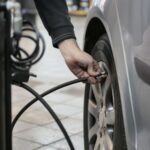
Push the tire pressure gauge straight onto the valve stem. You should hear a small hiss at first. Press firmly until the hiss stops. If air keeps escaping, the gauge may not be seated correctly. A digital gauge will show a number on the screen. A stick gauge will push out a small measuring stick.
Step 4: Read the PSI Number
Read the PSI number on the gauge. Compare it with the recommended PSI on your door sticker. For example, if your door sticker says 35 PSI and your gauge says 29 PSI, your tire is low. This is the key part of how to check tire pressure correctly. You are not guessing. You are comparing the real number with the correct number.
Step 5: Add Air if the Tire Is Low
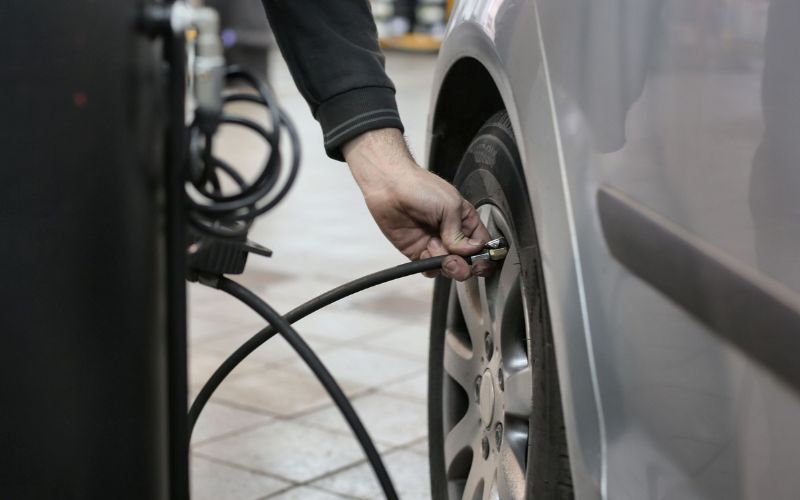
If the tire is low, use an air pump to add air. Add air in short bursts. Check the pressure again after each short burst. This helps you avoid overfilling the tire.
Step 6: Release Air if the Tire Is Too High
If the tire has too much air, press the small pin inside the valve stem. You can use the back of some gauges or a small tool. Let out a small amount of air, then check again. Do not release too much at once.
Step 7: Replace the Valve Cap
Once the tire reaches the correct PSI, screw the valve cap back on. Repeat the same steps for all four tires. Do not forget the spare tire if your vehicle has one. Many drivers ignore it until they need it.
Tire Pressure Gauge Types: Which One Should You Use?
A tire pressure gauge is a small tool that measures air pressure inside your tire. There are three common types.
Stick Tire Pressure Gauge
A stick gauge is cheap, small, and easy to keep in your glove box. It has a small bar that slides out to show the PSI. Therefore, it works well for most drivers who need a quick and simple reading. However, the markings may be harder to read in low-light conditions. As a result, using it at night or in poorly lit areas may be less convenient.
Dial Tire Pressure Gauge
A dial gauge has a round face with a needle. It looks like a small clock. Many dial gauges feel sturdy and easy to read. Some include a hose that makes it easier to reach the valve stem.
Digital Tire Pressure Gauge
A digital gauge shows the PSI on a screen. It is usually the easiest type for beginners. Some digital gauges also light up at night. The only downside is that they need batteries. For most everyday drivers, any good tire pressure gauge will work. Pick one that feels easy to read and comfortable to use.
Low Tire Pressure Symptoms You Should Not Ignore
Low tire pressure symptoms can be easy to miss at first. Many drivers only notice a problem after the tire gets very low.
Here are common signs:
- Tire pressure warning light on the dashboard
- Softer or heavier steering
- The car is pulling slightly to one side
- Poor fuel economy
- The tire looks flatter than normal
- Uneven tire wear
- Bumpy or unstable ride
Modern cars have a TPMS, or tire pressure monitoring system. This system turns on a warning light when tire pressure drops too low. Still, the warning light should not replace regular checks. A tire can lose air slowly before the light turns on. If one tire keeps losing pressure, check it for a nail, screw, cracked valve stem, or rim leak. A tire shop can inspect it quickly.
Tire Inflation Tips and Common Mistakes to Avoid
Good tire inflation tips can help you avoid wasted money and unsafe driving.
Check Tire Pressure Once a Month
You should check tire pressure at least once a month. Also, check before long road trips. Temperature changes can affect tire pressure. A cold morning may lower tire pressure by several PSI. This is why many tire lights turn on during fall and winter.
Do Not Inflate Based on Tire Sidewall PSI
The sidewall number is not your normal driving pressure. It shows the tire’s maximum safe pressure. Using that number can make the tire too hard. This may reduce comfort and cause uneven wear.
Check All Four Tires
Do not check only the tire that looks low—all four tires matter. One tire may be low, but the others may also need air. A quick full check gives you a better picture.
Do Not Overinflate Tires
Overinflated tires may wear faster in the center. They can also make your ride feel harsh. Too much pressure can reduce the tire’s contact with the road. That can affect braking and handling.
Check After Tire Repairs or Rotation
Check tire pressure after a tire repair, tire rotation, or new tire installation. Shops usually check pressure, but mistakes can happen. A quick check at home gives you peace of mind.
How Much Does Tire Inflation Cost?
Tire inflation is one of the cheapest car maintenance tasks. A basic tire pressure gauge usually costs $5–$25.Many gas station air pumps cost around $1–$2. Some tire shops, warehouse clubs, and service centers may offer free air. If you already have a portable air compressor, you can inflate tires at home. Small 12-volt compressors often cost around $25–$60.You do not need expensive tools to learn how to check tire pressure. A simple gauge and access to air are enough.
When Should You See a Mechanic or Tire Shop?
Checking tire pressure at home solves many simple problems. But some issues need a professional inspection.
Visit a mechanic or tire shop if:
- One tire loses air every few days
- You see a nail, screw, or cut in the tire
- The tire sidewall has a bubble
- The valve stem looks cracked
- Your tire pressure light stays on after inflation
- Your car shakes at highway speeds
- The tire has uneven or heavy wear
A slow leak may come from a small puncture, a damaged wheel, or a leaking valve stem. Many simple puncture repairs cost around $20–$40 in the US.Do not drive far on a tire that looks very low or flat. Driving on it can ruin the tire and damage the wheel. For more beginner-friendly help, SmartCarGuides.com also covers Car Problems and Car Tips for everyday drivers.
Final Thoughts
Knowing how to check tire pressure at home helps you drive more safely and avoid simple tire problems. It also saves money by helping your tires wear more evenly. Keep a tire pressure gauge in your glove box and check your tires once a month. Once you do it a few times, the process becomes quick and easy. For simpler driver guides, explore SmartCarGuides.com Car Maintenance and Used Car Buying sections. Small habits like this make car ownership much less stressful.
Frequently Asked Questions (FAQ)
How do I know what PSI my tires should be?
Check the sticker inside the driver-side door. It lists the correct PSI for your front and rear tires. You can also check your owner’s manual. Do not use the PSI printed on the tire sidewall for normal driving.
Can I check tire pressure after driving?
You can, but the reading may be higher because tires heat up while driving. For the best result, check when the tires are cold. Wait at least 3 hours after driving if possible.
How often should I check tire pressure?
Check tire pressure once a month and before long road trips. You should also check after big temperature changes. Cold weather can lower tire pressure and trigger the dashboard warning light.
What happens if I drive with low tire pressure?
Low tire pressure can cause poor fuel economy, uneven tire wear, and weaker handling. It can also make the tire heat up more while driving. In serious cases, it may lead to tire damage or a blowout.
Is 35 PSI good for all tires?
No, 35 PSI is common, but it is not correct for every vehicle. Some cars need less, while trucks and SUVs may need more. Always use the PSI listed on your vehicle’s door sticker.
Why does my tire pressure light come on in cold weather?
Cold air lowers tire pressure. That is why the tire pressure light often comes on during fall or winter mornings. Check the PSI with a tire pressure gauge and add air if needed.
Can I use a gas station air pump to inflate my tires?
Yes, you can use a gas station air pump. Set the pump to your recommended PSI if the machine allows it. Still, use your own tire pressure gauge to confirm the final reading.
